Honour of Annaly - Feudal Principality & Seignory Est. 1172
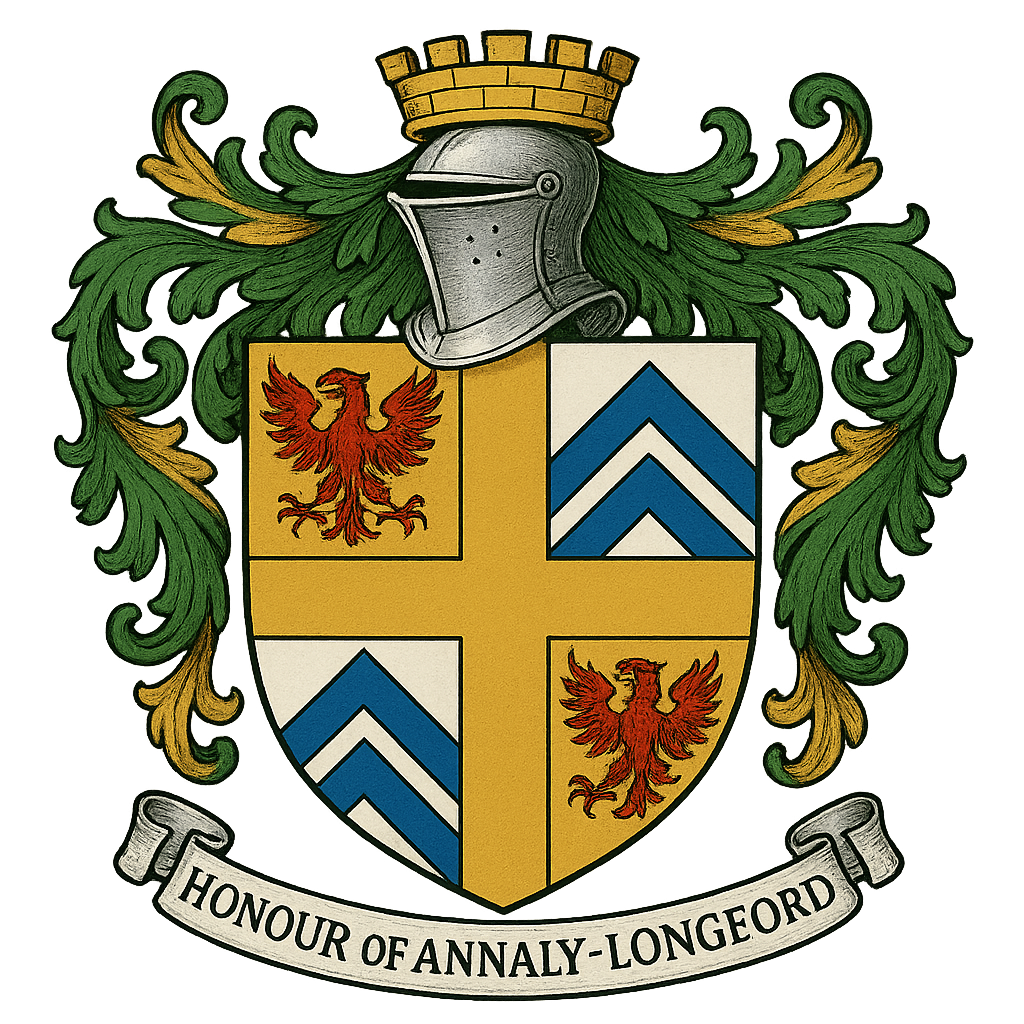

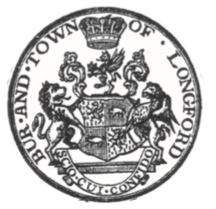
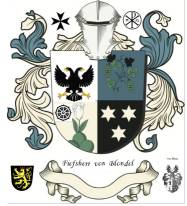
⚜️ The Regalian Jurisdiction of Longford–Annaly and the Feudal Principality of the Barons Delvin and Earls of WestmeathI. Origins of Feudal Authority – The Lordship of Meath and the De Lacy–Nugent Connection (1172–1202)Following the Norman invasion of Ireland (1172), King Henry II of England rewarded his loyal knight Hugh de Lacy with the Lordship of Meath, to be held by the service of fifty knights. This lordship was among the greatest seigniorial fiefs in Ireland, carrying regalian privileges unknown elsewhere — including the four royal pleas of arson, forestalling, rape, and treasure trove — and thus functioning almost as a palatinate within the realm. Around 1202, Hugh de Lacy granted to Sir Gilbert de Nugent, his companion and chief retainer, the extensive lands of
Delvin (Delbhna). This conveyance created the Barony of Delvin, which became the hereditary seat of the Nugent family for over
eight centuries. II. Early Gaelic and Anglo-Norman Integration – The Delvin Tribes and Teffian Lords (13th–15th Centuries)The lands of Delvin included the territories of the O’Fenelon (Ó Fionnalláin) and O’Skully clans, ancient chiefs of Teffia (Tethba) — the precursor to modern Longford. These Gaelic septs became vassals under the De Nugents, who blended Norman seignorial structure with native Irish lordship customs. By the fifteenth century, the Barons Delvin were entrenched as the only hereditary nobility of Westmeath, acting as local governors for the Crown and
arbiters of both English and Gaelic inhabitants. III. Tudor Reorganization and the Reassertion of Feudal Rights (1494–1550)The Tudor monarchs recognized the Delvins’ role as loyal intermediaries between the Pale and the Gaelic west. In 1494, Gilbert Nugent, Baron of Delvin, was appointed Chief Captain of the King’s Forces in Ireland by Henry VII, with a salary of £200 yearly. This commission placed him in charge of all royal troops in the island — effectively the Crown’s Captain-General, an office of princely command. Two years later, in 1496, Richard, 7th Baron Delvin, was made Commander and Leader-in-Chief of all Forces of Dublin, Meath, Kildare, and Louth,
further cementing the family’s regalian status. IV. The Tudor Expansion into Annaly and the O’Farrell Lands (1552–1565)The sixteenth century saw the absorption of the old Gaelic principality of Annaly (Anghaile) into Crown control. The region, historically ruled by the Princes O’Farrell, corresponded to the modern County Longford and parts of Westmeath. In 1552, King Edward VI granted to Baron Delvin extensive estates within Annaly — including the Monastery and Holy Island (Inchcleraun / Lough Ree), as well as the Priory of Inchmore (Lough Gowna) — to hold in capite by knight’s service. These were not mere religious lands; they were strategic strongholds symbolizing sovereignty over the O’Farrell territory. Further royal charters by Philip and Mary (1556–1557) expanded the Delvin estate to include:
These grants predated the formal creation of County Longford, showing that the Delvins were recognized as feudal lords of Annaly before it was a county. V. The Captaincy and Chiefship of Slewaght William (1565)In 1565, Queen Elizabeth I granted to Christopher Nugent, Baron Delvin, the Captainship and Chiefship of Slewaght William (Clan Liam) — a hereditary
captaincy and chieftainship within the Annaly region, centered around
Ardagh and Edgeworthstown. VI. Market, Fair, and Court Rights – The Economic Jurisdiction of Annaly (1605)In 1605, King James I issued a market and fair charter to the Baron Delvin, granting him the right to hold a weekly Thursday market and a yearly fair on August 1st at Longford, with all accompanying courts baron, courts leet, tolls, and profits. This grant symbolized royal recognition of Longford (the ancient Longphort Uí Fhearghail) as the capital seat of Annaly, with Delvin as its baronial overlord and market lord. VII. James I and the Confirmation of Feudal Rights (1609–1620)Between 1609 and 1620, King James reissued and expanded grants to the Nugents of Delvin, reaffirming their rights “in capite by military service” to the lands, abbeys, and castles of the Annaly region, including:
Each of these grants explicitly carried with it courts leet, view of frankpledge, power to appoint seneschals, and jurisdiction in civil actions — the hallmarks of a manorial court of record. The Charter of 1609 effectively confirmed the Seignory of Annaly–Longford as a feudal liberty held directly from the Crown, preserving the regalian rights of the Barons Delvin. VIII. Creation of the Earldom of Westmeath and Papal Recognition (1621–1635)In 1621, Richard Nugent, 9th Baron Delvin, was elevated by King James I to
Earl of Westmeath, formally uniting the Delvin and Annaly–Longford territories
under a single comital dignity. IX. Character and Legal Standing of the Annaly SeignoryThe long chain of royal grants and offices — beginning with the De Lacy–Nugent fief of 1202 and
culminating in the James I confirmations — demonstrates that the Lordship of Annaly (Longford) functioned as a regalian seignory: By English legal definition, this constitutes a Feudal Barony; by Irish and Continental analogy, it amounted to a
Feudal Principality. X. Conclusion: The Regalian Legacy of the Baron's Delvin & Nugent Lords of Longford–AnnalyFrom the first Norman partition of Meath in the twelfth century to the Jacobean confirmations of
the seventeenth, the Nugents of Delvin and Westmeath preserved a continuous chain of
feudal sovereignty, military command, and manorial justice over
Longford–Annaly. The ancient princely lordships of Annaly and Delvin (Delbhna–Teffia) were originally ruled by the O’Fearghail (O’Farrell) dynasty, Princes of Anghaile, together with the noble septs of O’Quinn (Ó Cuinn) of Rathcline, Mac Gilligan (Mac Giollagáin) of Muintir Gilligan, O’Mulfeeney (Ó Maolfhíneadha) of Corcard, O’Duignan (Ó Duibhgeannáin) of Ardagh, O’Skelly (Ó Scealláin) and O’Skully (Ó Scolaighe) of South Teffia, O’Reilly (Ó Raghallaigh) and O’Murray (Ó Muireadhaigh) on the eastern borders, Mac Donough (Mac Donnchadha) and O’Hanley (Ó hAinle) near Lough Ree, and the O’Fenelon (Ó Fionnaláin) and O’Finnallan chiefs of the ancient Delbhna or Delvin tribes of Western Westmeath—collectively forming the hereditary nobility of the old kingdom of Teffia, later known as the Principality of Annaly. Thus, under both English feudal law and Gaelic custom, the Annaly–Longford seignory stands as a true Feudal Barony with Regalian Jurisdiction — in substance a Principality under the Crown. How the Honour & Principality of Annaly–Teffia Compares to Other Claimants of Fons HonorumIncluding Ecclesiastical Grants, Papal Recognition, and the Dynastic De Lacy LineUnder the jurisprudence outlined in the Legal Opinion on the Fons Honorum of the House of Paternò Castello—which establishes that formerly sovereign or princely houses retain their dynastic fons honorum so long as they were not extinguished by debellatio—the Honour of Annaly–Teffia compares exceptionally strongly against other European fons honorum claimants. Annaly–Teffia is unique because it possesses all three pillars of legitimate sovereignty:
Very few continental houses today retain this complete triad. ⭐ I. Dynastic Legitimacy Strengthened by the De Lacy Marriage LineThe succession of the Honour was fortified when: Gilbert Nugent, 1st Baron of Delvin, married Rosa de Lacy,a member of the ruling Palatine De Lacy dynasty. This produced a bloodline fusion between:
This mirrors the situation examined in the Paternò Castello opinion, where:
Thus the Honour of Annaly–Teffia possesses: ✔ Gaelic royal blood (O’Farrell, O’Quinn, O’Connor)✔ Norman palatine blood (De Lacy)✔ Hereditary continuation (Nugent, Barons Delvin → Earls of Westmeath)This is more robust than most modern claimants, who lack any dynastic transmission grounded in historical rulership. ⭐ II. Territorial Sovereignty — Crown Grants Confirming Nugent/Delvin Princely Authority (1541–1605)Beginning with Henry VIII, the English Crown formalized the Nugents as the successor-princes of Annaly–Teffia through a long sequence of royal grants: 1541 — Henry VIII
1552 — Edward VI
1557 — Philip & Mary
1565 — Elizabeth I
1605 — James I
Collectively these Crown acts created the Nugents/Delvins as:
This quantity and quality of royal confirmation surpasses most continental princely houses. ⭐ III. Ecclesiastical Sovereignty — Moiety of Ardagh & Papal Recognition of Holy Island RightsUnlike nearly all modern claimants, Annaly–Teffia includes sacred Christian princely authority, which Gaelic sovereignty regarded as inseparable from temporal rule. The Moiety of ArdaghThe Bishop granted to Delvin a moiety (half-lordship) of Ardagh, the sacred capital of ancient Annaly. This was not a trivial grant:
Receiving the moiety meant the Delvin family inherited the sacred dimension of Gaelic sovereignty, just as ecclesiastical princes in Europe ruled dual temporal-spiritual jurisdictions. This mirrors the structure of:
Papal Recognition of Delvin’s Rights to the Holy IslandsThe Papacy recognized Delvin’s rights over the Holy Islands of Annaly—particularly:
In medieval Ireland, control of holy islands equated to true princely ecclesiastical sovereignty. Papal recognition is the highest form of ecclesiastical acknowledgement and places Annaly–Teffia in the rare category of princely houses whose sovereignty was also: ✔ Sacred✔ Christian✔ Recognized by RomeThis is extraordinarily rare among surviving feudal dignities. ⭐ IV. Comparison to Other European Fons Honorum ClaimantsUsing the criteria from Freiherr von Quast’s legal analysis:
Annaly–Teffia compares as follows:
✦ Conclusion:The Honour & Principality of Annaly–Teffia is comparable not to modern self-styled dynasties, but to the mediatised princely houses of Germany and the ecclesiastical princes of Central Europe, and it exceeds many Mediterranean princely claims in documentary strength. It is one of the very few surviving feudal honours in Europe with:
No other Irish honour, and very few continental houses, combine all five. | |||||||||||||||||||||||||||||||||||
About Longford Feudal Prince Statutory Declaration by Earl Westmeath Kingdoms of County Longford Pedigree of Longford Annaly What is the Honor of Annaly The Seigneur Lords Paramount Ireland Market & Fair Chief of The Annaly Lord Governor of Annaly Prince of Annaly Tuath Principality Fons Honorum Seats of the Kingdoms Clans of Longford Region History Chronology of Annaly Longford Hereditaments Captainship of Ireland Princes of Longford News Feudal Princes Principality of Cairbre-Gabhra Count of the Palatine of Meath 900 Years Irish Law A Barony Explained Moiety of Barony of Delvin Spiritual & Temporal Islands of The Honour of Annaly Longford Blood Dynastic Water Rights Annaly Writs to Parliament Moiety of Ardagh Dual Grant from King Philip of Spain Rights of Lords & Barons Princes of Annaly Pedigree Abbeys of Longford Styles and Dignities Sovereign Title Succession Grants to Delvin Lord of St. Brigit's Longford Abbey Est. 1578 Feudal Barons Water & Fishing Rights Ancient Castles and Ruins Kingdom of Meath Feudal Westmeath Seneschal of Meath Lord of the Pale Irish Gods The Feudal System Baron Delvin Kings of Hy Niall Colmanians Irish Kingdoms Order of St. Columba Chief Captain Kings Forces Commissioners of the Peace Tenures Abolition Act 1662 - Rights to Sit in Parliament Contact Law of Ireland List of Townlands of Longford Annaly English Pale Court Barons Lordships of Granard Irish Feudal Law Datuk Seri Baliwick of Ennerdale Moneylagen Lord Baron Longford Baron de Delvyn Longford Map Lord Baron of Delvin Baron of Temple-Michael Baron of Annaly Kingdom Annaly Lord Conmaicne Baron Annaly Order of Saint Patrick Baron Lerha Granard Baron AbbeyLara Baronies of Longford Princes of Conmhaícne Angaile or Muintir Angaile Baron Lisnanagh or Lissaghanedan Baron Moyashel Baron Rathline Baron Inchcleraun HOLY ISLAND Quaker Island Longoford CO Abbey of All Saints Kingdom of Uí Maine Baron Dungannon Baron Monilagan - Babington Lord Liserdawle Castle Baron Columbkille Kingdom of Breifne or Breny Baron Kilthorne Baron Granarde Count of Killasonna Baron Skryne Baron Cairbre-Gabhra AbbeyShrule Events Castle Site Map Disclaimer Irish Property Rights Indigeneous Clans Dictionary Honorable Colonel Mentz Valuation of Principality & Barony of Annaly Longford
Feudal Baron of Longford Annaly - Baron Longford Delvin Lord Baron &
Freiherr of Longford Annaly Feudal Barony Principality Count Kingdom of Meath - Feudal Lord of the Fief
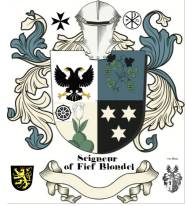
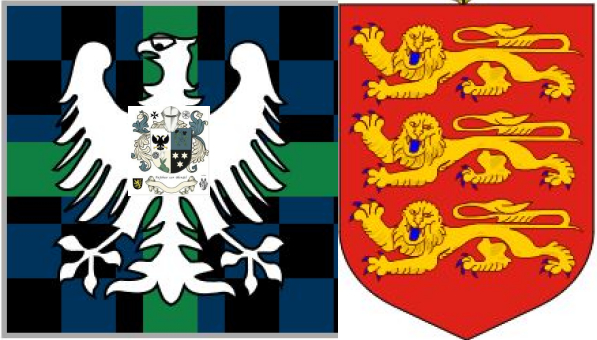
Blondel of the Nordic Channel Islands Guernsey Est. 1179 George Mentz
Bio -
George Mentz Noble Title -
George Mentz Ambassador - Order of the Genet
Knighthood Feudalherr - Fief Blondel von der Nordischen
Insel Guernsey Est. 1179 * New York Gazette ®
- Magazine of Wall Street - George
Mentz - George
Mentz - Aspen Commission - Ennerdale - Stoborough - ESG
Commission - Ethnic Lives Matter
- Chartered Financial Manager -
George Mentz
Economist -
George Mentz Ambassador -
George Mentz - George Mentz Celebrity -
George Mentz Speaker - George Mentz Audio Books - George Mentz Courses - George Mentz Celebrity Speaker Wealth
Management -
Counselor George Mentz Esq. - Seigneur Feif Blondel - Lord Baron
Longford Annaly Westmeath
www.BaronLongford.com * www.FiefBlondel.com |
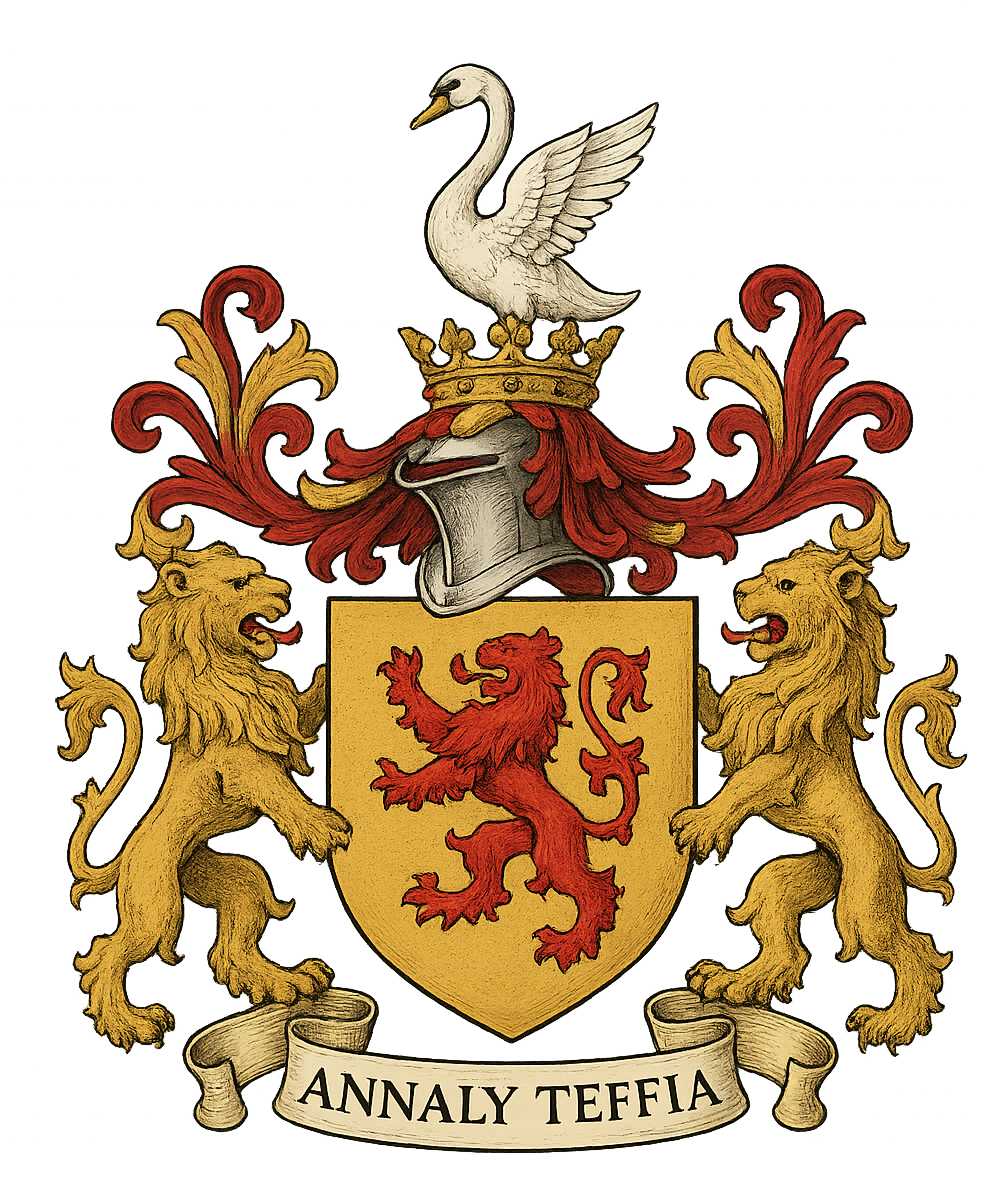
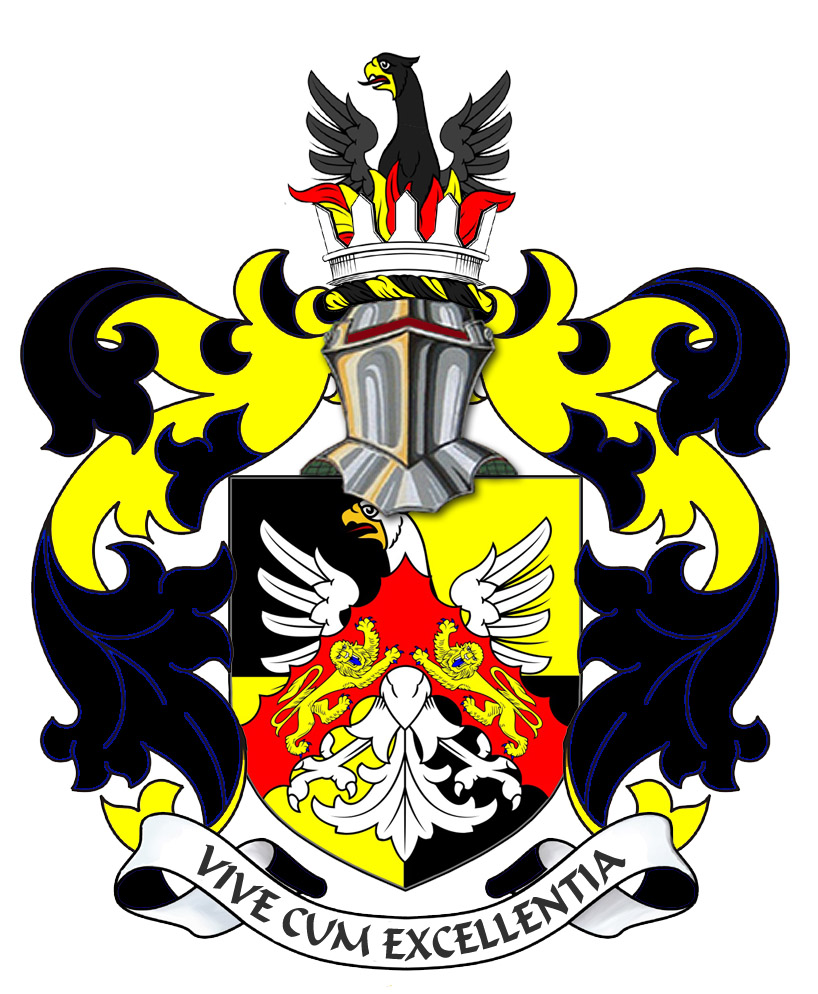

Commissioner George Mentz - George
Mentz Law Professor - George
Mentz Economist
George Mentz News -
George Mentz Illuminati Historian -
George Mentz Net Worth
The Globe and Mail George Mentz
Get Certifications in Finance and Banking to Have Career Growth | AP News