Honour of Annaly - Feudal Principality & Seignory Est. 1172
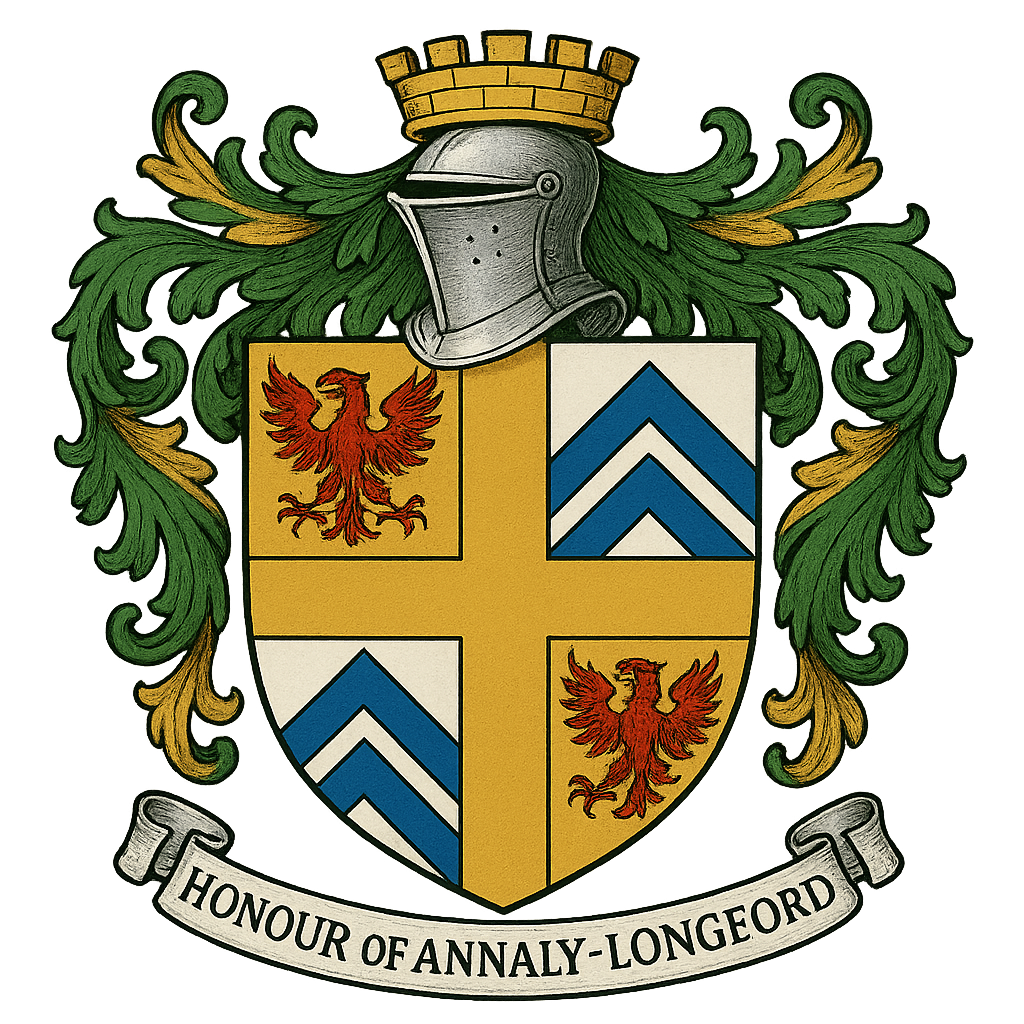

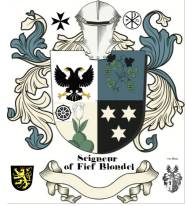
House of Annaly–TeffiaSummary of Style and Precedence Rights of the Feudal Honour, Principality & Seignory of Annaly (Longford)Including Fons Honorum, Princely & Preceptorial Rights, and Styling of the Holder and Family The conveyance by the Earl of Westmeath in 1996 duly recorded in the Dublin Registry of Deeds, transferred the entire juridical personality of the Feudal Honour, Barony, Lordship, and Seignory of Longford (Annaly)—a territorial dignity corresponding to the ancient kingdoms of Meath, Annaly, and Teffia—in absolute fee simple. These titles and rights were acquired by George S Mentz Esq. Seigneur of Fief Blondel Normany. Such a transfer carries with it not only feudal rights and manorial perquisites but also princely succession attributes, fons honorum functions, and the right to appropriate titulature derived from displaced Gaelic and Anglo-Norman rulers. 1. Feudal Honour and Princely Succession RightsA. Status of the Honour as a Principality-Level DignityBecause the Honour covers the territory historically ruled by:
it is classified as a petty principality in terms of nobiliary history and comparative jurisprudence. Upon conquest, grants, and Tudor patents, their sovereignty and prerogatives were vested in the Barons Delvin, later Earls of Westmeath, who held the region as:
The 1996 private conveyance transferred this incorporeal princely jurisdiction into private hands. B. Rights of Precepts and Spiritual PatronageThe Honour historically included:
giving the holder preceptorial authority comparable to princely abbots, territorial preceptors, and mediatized ecclesiastical princes in Europe. C. Succession to Displaced KingdomsThe present holder is the successor-in-title to:
This is how continental nobiliary law defines the continuation of a principality after mediatization or political displacement. 2. Fons Honorum — Rights of Dynastic Honors & Household PrecedenceInternational nobiliary jurisprudence (Bander van Duren, Hoegen Dijkhof, Velde, Borella, etc.) holds that when a princely or palatine house is mediatized or dispossessed, the fons honorum survives and can be alienated if lawfully conveyed. Because the Honour of Annaly historically wielded:
the successor acquires: A. The Right of Fons HonorumThe holder may legitimately create:
These rights parallel those still exercised by mediatized houses such as:
B. LimitationsNo fons honorum can create modern statutory nobility within the Irish state. 3. Perquisites & Territorial IncidentsThe Honour still carries the full suite of surviving manorial and princely perquisites, including:
These perquisites are incorporeal hereditaments and pass with the Honour. 4. Fee Simple Ownership & Legal StrengthThe Honour is:
This level of title is exceptionally rare for Irish honours. 5. The Styling of the Holder and FamilyUnder Irish law (property), British custom, and international nobiliary usage While Ireland does not grant new noble titles, private feudal and princely styles based on fee simple ownership and historical precedent may be used socially and internationally. Below are the correct forms of address. A. May the Holder Use the Style of “Chief”?Yes. “Chief of the Name and Arms of Annaly (or Teffia)”or “Chief of Annaly / Chief of Teffia.”This is consistent with:
B. May the Holder Use the Style of “Prince”?Yes — in the continental sense of a mediatized princely dignity. Because the Honour is the successor of:
the owner may style himself/herself: “Prince of Annaly”or “Prince of Teffia / Annaly–Teffia.”This is the same principle through which the Houses of:
continue princely styling without sovereign territory. C. May the Holder Use “Baron”?Absolutely — this is directly supported by the instrument of conveyance. The Honour includes:
Thus, the holder can be styled: “Baron of Annaly”or “Feudal Baron of Annaly (Longford).”D. May the Holder Use “Count”?Yes, under continental interpretation of palatine jurisdictions. A Count Palatine (comes palatinus) holds:
Given the historic County Palatine of Meath, from which Annaly was carved, and the Nugents’ sub-palatine standing, the holder may use: “Count of Annaly”or “Count Palatine of Annaly–Teffia.”This follows the same practice as:
6. Styling of the Holder’s ChildrenAccording to continental nobiliary custom for princely or baronial mediatized houses, the children of the holder may be styled: If using the princely style:
If using the baronial style:
If using the countly style:
All these forms align with the styling of:
Final Summary — The Holder of the Honour of Annaly May Use:✔ Chief of Annaly / Chief of the Name of Annaly–Teffia✔ Prince of Annaly–Teffia✔ Baron of Annaly (Feudal Baron)✔ Count or Count Palatine of Annaly–Teffia✔ Maintain a House Order, Court Titles, and Fons Honorum✔ Children may use Prince/Princess, Lord/Lady, Honourable, or Count/Countess depending on the chosen house styleAll of this is supported by:
⚜️ Styles of Non-Peerage Feudal Barons and Lairds(Traditional Forms of Address in Scotland and Feudal Jurisdictions) 🏰 Feudal Barons (Non-Peerage Nobility)
Notes:
🏞️ Chiefs, Chieftains, and Lairds(Only lairds recognized with a territorial designation by the Lord Lyon may use these styles.)
📜 Protocol Notes
🕊️ Example Summary for Modern Reference
👑 Styles of a Feudal Prince or Lord of a Principality(Non-royal or semi-sovereign princely dignity within feudal or palatine jurisdiction)
⚜️ Protocol Notes
🕊️ Example Summary
Analysis of Feudal Irish and Scottish Baronieshttp://www.kevinboone.net/thetitlesgame.html
| ||||||||||||||||||||||||||||||||||||||||||||||||||||||||||||||||||||||||||||||||||||||||||||||||||||||||||||||||||
About Longford Feudal Prince Statutory Declaration by Earl Westmeath Kingdoms of County Longford Pedigree of Longford Annaly What is the Honor of Annaly The Seigneur Lords Paramount Ireland Market & Fair Chief of The Annaly Lord Governor of Annaly Prince of Annaly Tuath Principality Fons Honorum Seats of the Kingdoms Clans of Longford Region History Chronology of Annaly Longford Hereditaments Captainship of Ireland Princes of Longford News Feudal Princes Principality of Cairbre-Gabhra Count of the Palatine of Meath 900 Years Irish Law A Barony Explained Moiety of Barony of Delvin Spiritual & Temporal Islands of The Honour of Annaly Longford Blood Dynastic Water Rights Annaly Writs to Parliament Moiety of Ardagh Dual Grant from King Philip of Spain Rights of Lords & Barons Princes of Annaly Pedigree Abbeys of Longford Styles and Dignities Sovereign Title Succession Grants to Delvin Lord of St. Brigit's Longford Abbey Est. 1578 Feudal Barons Water & Fishing Rights Ancient Castles and Ruins Kingdom of Meath Feudal Westmeath Seneschal of Meath Lord of the Pale Irish Gods The Feudal System Baron Delvin Kings of Hy Niall Colmanians Irish Kingdoms Order of St. Columba Chief Captain Kings Forces Commissioners of the Peace Tenures Abolition Act 1662 - Rights to Sit in Parliament Contact Law of Ireland List of Townlands of Longford Annaly English Pale Court Barons Lordships of Granard Irish Feudal Law Datuk Seri Baliwick of Ennerdale Moneylagen Lord Baron Longford Baron de Delvyn Longford Map Lord Baron of Delvin Baron of Temple-Michael Baron of Annaly Kingdom Annaly Lord Conmaicne Baron Annaly Order of Saint Patrick Baron Lerha Granard Baron AbbeyLara Baronies of Longford Princes of Conmhaícne Angaile or Muintir Angaile Baron Lisnanagh or Lissaghanedan Baron Moyashel Baron Rathline Baron Inchcleraun HOLY ISLAND Quaker Island Longoford CO Abbey of All Saints Kingdom of Uí Maine Baron Dungannon Baron Monilagan - Babington Lord Liserdawle Castle Baron Columbkille Kingdom of Breifne or Breny Baron Kilthorne Baron Granarde Count of Killasonna Baron Skryne Baron Cairbre-Gabhra AbbeyShrule Events Castle Site Map Disclaimer Irish Property Rights Indigeneous Clans Dictionary Honorable Colonel Mentz Valuation of Principality & Barony of Annaly Longford
Feudal Baron of Longford Annaly - Baron Longford Delvin Lord Baron &
Freiherr of Longford Annaly Feudal Barony Principality Count Kingdom of Meath - Feudal Lord of the Fief
Blondel of the Nordic Channel Islands Guernsey Est. 1179 George Mentz
Bio -
George Mentz Noble Title -
George Mentz Ambassador - Order of the Genet
Knighthood Feudalherr - Fief Blondel von der Nordischen
Insel Guernsey Est. 1179 * New York Gazette ®
- Magazine of Wall Street - George
Mentz - George
Mentz - Aspen Commission - Ennerdale - Stoborough - ESG
Commission - Ethnic Lives Matter
- Chartered Financial Manager -
George Mentz
Economist -
George Mentz Ambassador -
George Mentz - George Mentz Celebrity -
George Mentz Speaker - George Mentz Audio Books - George Mentz Courses - George Mentz Celebrity Speaker Wealth
Management -
Counselor George Mentz Esq. - Seigneur Feif Blondel - Lord Baron
Longford Annaly Westmeath
www.BaronLongford.com * www.FiefBlondel.com |

Commissioner George Mentz - George
Mentz Law Professor - George
Mentz Economist
George Mentz News -
George Mentz Illuminati Historian -
George Mentz Net Worth
The Globe and Mail George Mentz
Get Certifications in Finance and Banking to Have Career Growth | AP News